Bhutan’s agricultural landscape is experiencing a remarkable transformation, where modern farming techniques are being seamlessly integrated with traditional practices. This progressive shift is paving the way for a more sustainable and resilient future for farmers across the kingdom.
The Shift to Precision Agriculture
Precision agriculture is becoming increasingly important for Bhutan because it offers a smarter and more practical way to improve farming while protecting the environment and supporting farmers’ livelihoods.
In Bhutan, most farmers work on small plots of land in difficult mountainous terrain. This makes it hard to produce enough food, especially when labour is limited and weather patterns are becoming less predictable. Precision agriculture helps address these challenges by using modern tools like GPS, soil testing, sensors, and data-based planning to guide farming decisions.
Instead of treating every part of a field the same, precision agriculture helps farmers understand exactly what each section of their land needs how much water, fertilizer, or care is required. This means crops grow better while reducing unnecessary costs and waste.
It also helps farmers save time and effort. With fewer people available in rural areas, technology can support farming activities and reduce heavy manual work. At the same time, it helps farmers respond better to climate changes, such as irregular rainfall or soil conditions, by giving timely and accurate information.
Another important benefit is sustainability. Bhutan has a strong commitment to organic and environmentally friendly farming. Precision agriculture supports this goal by reducing excessive use of chemicals and protecting soil and water resources for the future.
Overall, shifting to precision agriculture is not just about modern technology and it is about making farming in Bhutan more productive, less stressful for farmers, and better prepared for future challenges, while staying true to the country’s sustainable values.
Drip Irrigation Systems
Drip irrigation is a highly efficient water-saving technology well-suited to Bhutan’s varied terrain. By delivering water directly to the plant root zone in controlled amounts, it minimizes evaporation and runoff, reducing overall water use by up to 60%. This system is especially valuable in water-scarce areas, helping farmers maintain healthy crop growth while conserving precious water resources. It also improves fertilizer efficiency, enhances crop yields, and supports more sustainable and climate-resilient agriculture across the country.
Mechanization and Equipment
Farm mechanization in Bhutan is emerging as a key driver of agricultural transformation, especially in the context of the country’s small and fragmented landholdings and its challenging mountainous terrain. Traditionally, farming in Bhutan has been highly labor-intensive, relying heavily on manual effort and seasonal labor availability. However, with changing socio-economic conditions, rural out migration, and an aging farming population, the need for efficient and time-saving agricultural practices has become increasingly important.
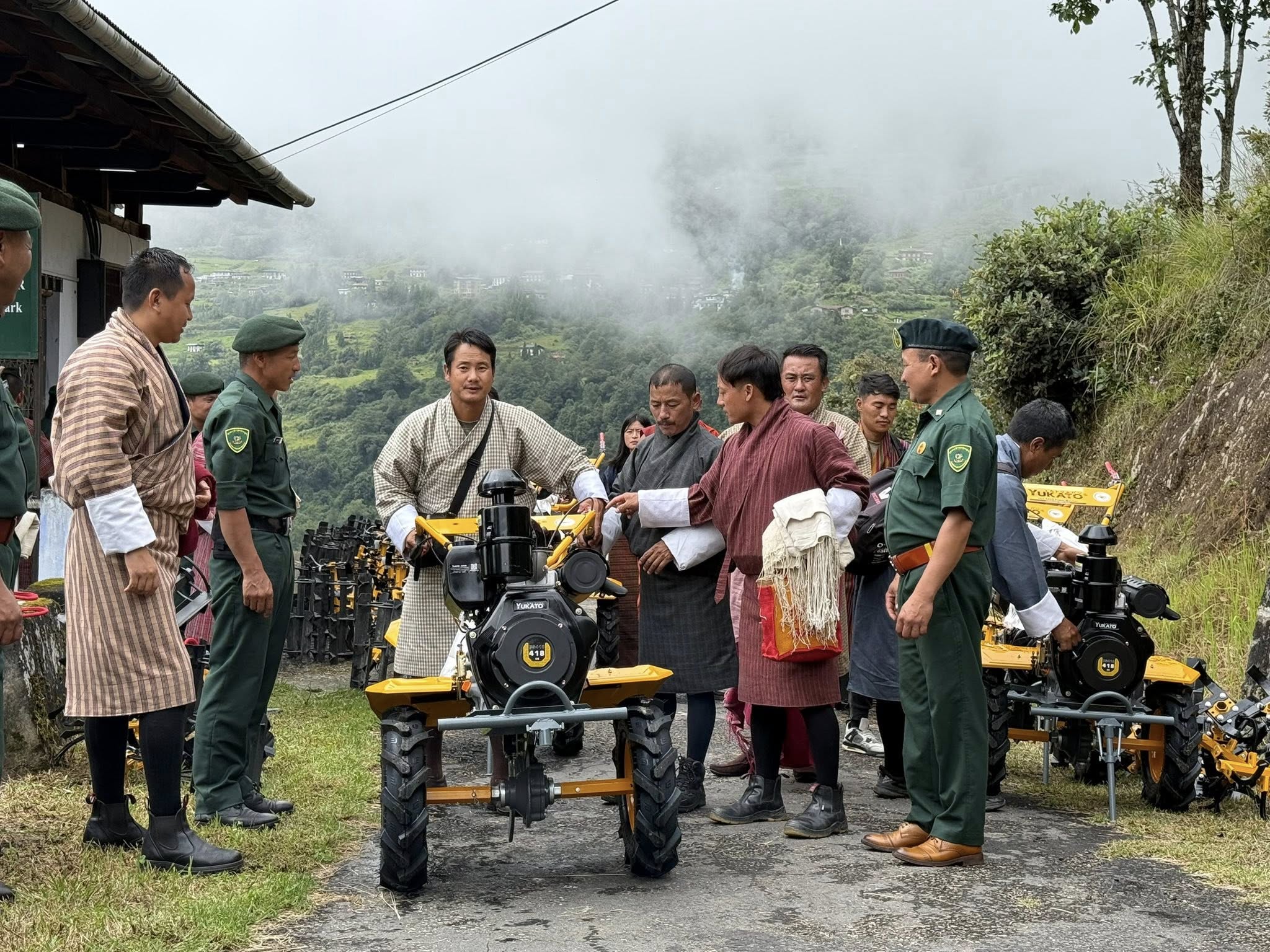
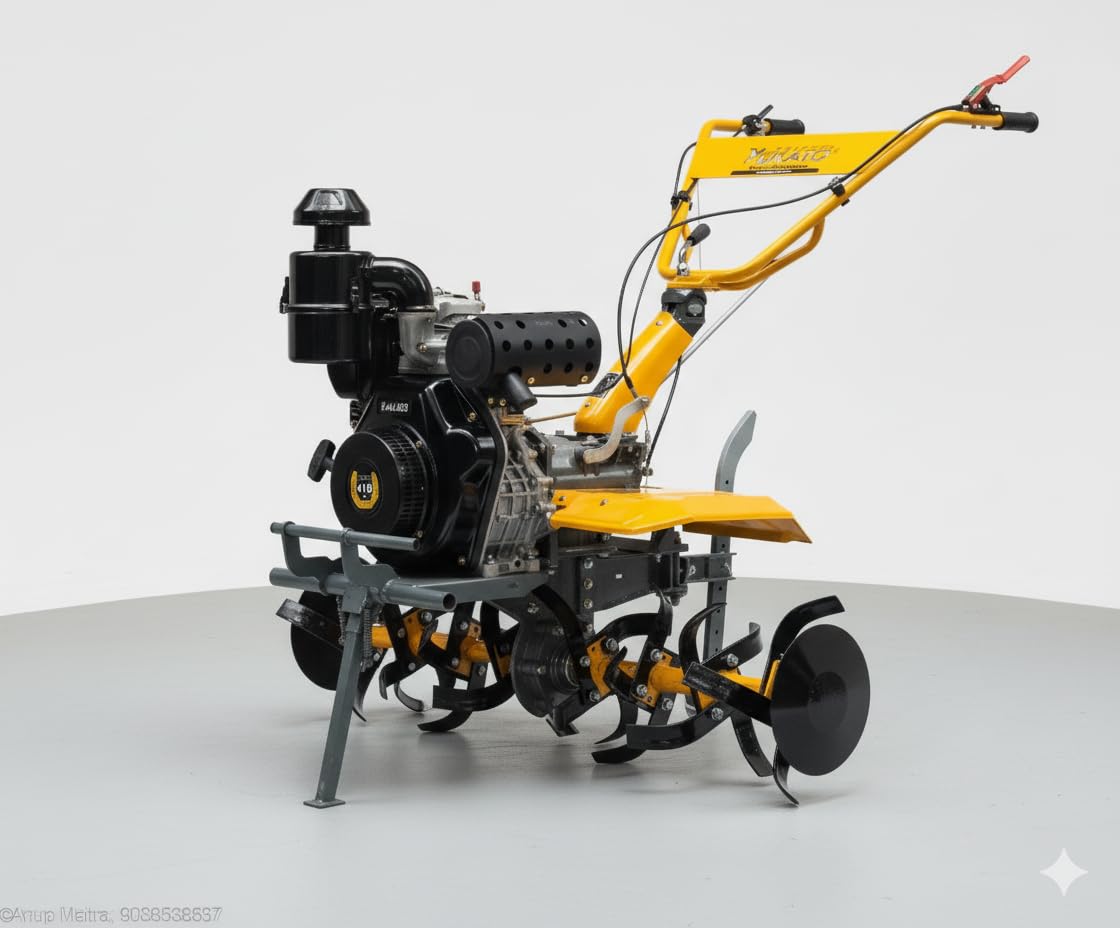
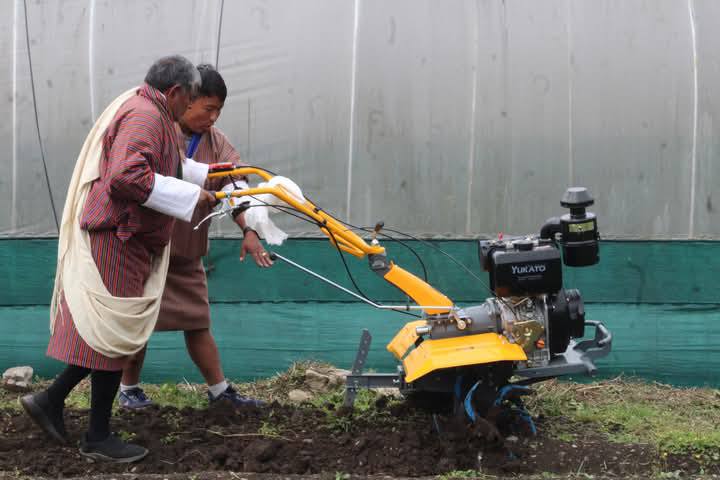
The introduction of appropriate farm machinery such as mini tillers, tractors, seeders, and harvesters, designed or adapted for hilly and uneven landscapes has significantly eased the burden on farmers. These tools allow even small land parcels to be cultivated more efficiently, ensuring that critical farming operations such as land preparation, planting, and harvesting are completed within the optimal time window. In agriculture, timeliness is crucial, and mechanization directly contributes to improved crop productivity and reduced losses.
Given Bhutan’s predominantly small-scale and scattered landholdings, large conventional machinery is often unsuitable. Therefore, the emphasis on small, lightweight, and terrain-friendly equipment is particularly important. This appropriate-scale mechanization ensures that even marginal farmers can benefit without compromising land integrity or increasing operational costs beyond their capacity.
Beyond productivity gains, farm mechanization also plays a vital role in improving rural livelihoods. It reduces drudgery, saves time, and allows farmers to engage in other income-generating activities. In the long run, it contributes to making agriculture more attractive to younger generations, helping to address rural-urban migration.
Overall, farm mechanization in Bhutan is not merely about introducing machines and it is about reshaping the agricultural system into one that is more efficient, resilient, and sustainable. By aligning modern equipment with Bhutan’s unique geographical and socio-economic conditions, mechanization is strengthening food security, improving rural incomes, and supporting the country’s broader vision of sustainable development.
Organic Farming Integration
Bhutan’s approach to agriculture is distinguished by its seamless integration of modern farming techniques with organic agriculture principles. Guided by a national commitment to sustainability, the country is steadily advancing toward organic farming while carefully incorporating appropriate technologies to enhance productivity and efficiency. This balanced model ensures that agricultural development does not compromise environmental integrity, but instead strengthens it. As a result, Bhutan is emerging as a global example of how innovation and tradition can work together to create a resilient, eco-friendly, and sustainable agricultural system that other nations are increasingly looking to emulate.
Training and Education
Educating and training farmers on the benefits and use of farm machinery and equipment is a critical step in transforming Bhutan’s agriculture into a more productive, efficient, and sustainable sector.
Depel Agro Tech Private Limited is committed to supporting this transformation by providing comprehensive training programs that go beyond simply introducing machinery. The focus is on ensuring farmers truly understand how and why these tools improve farming practices. Through hands-on workshops, field demonstrations, and practical learning sessions, farmers are given the opportunity to directly engage with modern equipment such as power tillers, small-scale harvesters, and irrigation systems. This approach helps bridge the gap between traditional knowledge and modern agricultural technology.
When farmers are properly trained, they gain confidence in using machinery safely and effectively. They learn how mechanization can reduce physical labor, save time, lower production costs, and increase crop yields. More importantly, training helps farmers make informed decisions about which equipment best suits their land size, terrain, and crop type an especially important factor in Bhutan’s mountainous and diverse farming conditions.
Beyond productivity, farmer education also plays a key role in sustainability. Proper use and maintenance of machinery reduces fuel waste, prevents soil damage, and supports more precise farming practices, all of which contribute to long-term environmental conservation.
Ultimately, the future of Bhutanese agriculture depends on this balanced integration of tradition and innovation. While modern farming techniques are being introduced, it is equally important to preserve the country’s rich environmental heritage. Through continuous education and training, company is helping farmers embrace technology in a way that strengthens livelihoods while protecting the natural environment that Bhutan is globally respected for.
Share this article:

Lobzang Tenzin
CEO
Lobzang Tenzin is a professional with over 20 years of experience in leadership roles across government, state-owned enterprises, FDI company, and the private sectors. His work has mainly focused on project management, human resource development, financial management, and organizational transformation in sectors such as mining, manufacturing, trading, environmental governance, and green development.
He holds a Master’s degree in Business with a specialization in Human Resource Management and Development from Queensland University of Technology, Australia, and a Bachelor’s degree in Dzongkha from Sherubtse College, Bhutan. Over the years, he has built strong expertise in strategic planning, HR systems, performance management, talent development, succession planning, and financial and inventory control.
Beyond his corporate roles, he has actively contributed to national development initiatives through various task forces and capacity-building programs with organizations such as the Royal Civil Service Commission, Anti-Corruption Commission, and UNESCAP.
He currently serves as the CEO of Depel Agro Tech Private Limited and Chairperson of BIEBS Private Limited where he continues to focus on supporting rural development, industrial growth, and sustainable economic progress in Bhutan.
Need Agricultural Solutions?
Contact us on WhatsApp to learn more about our products and services tailored for Bhutanese agriculture.