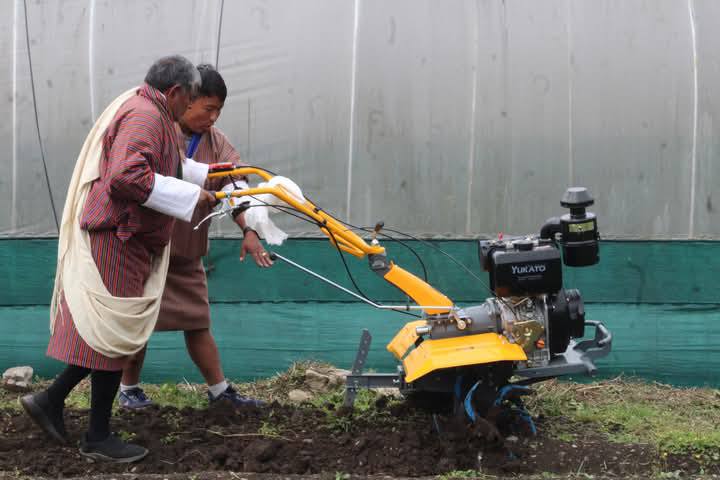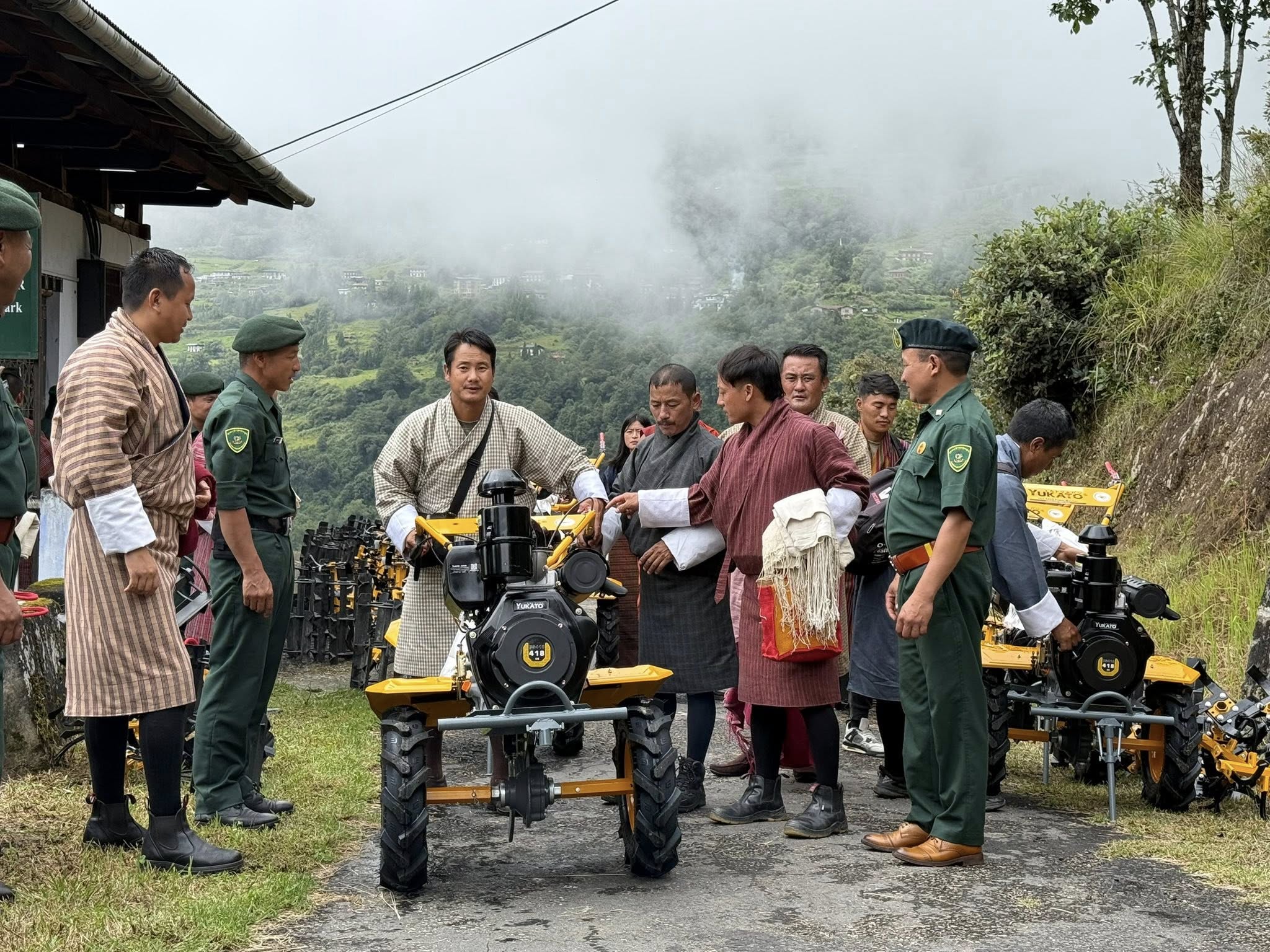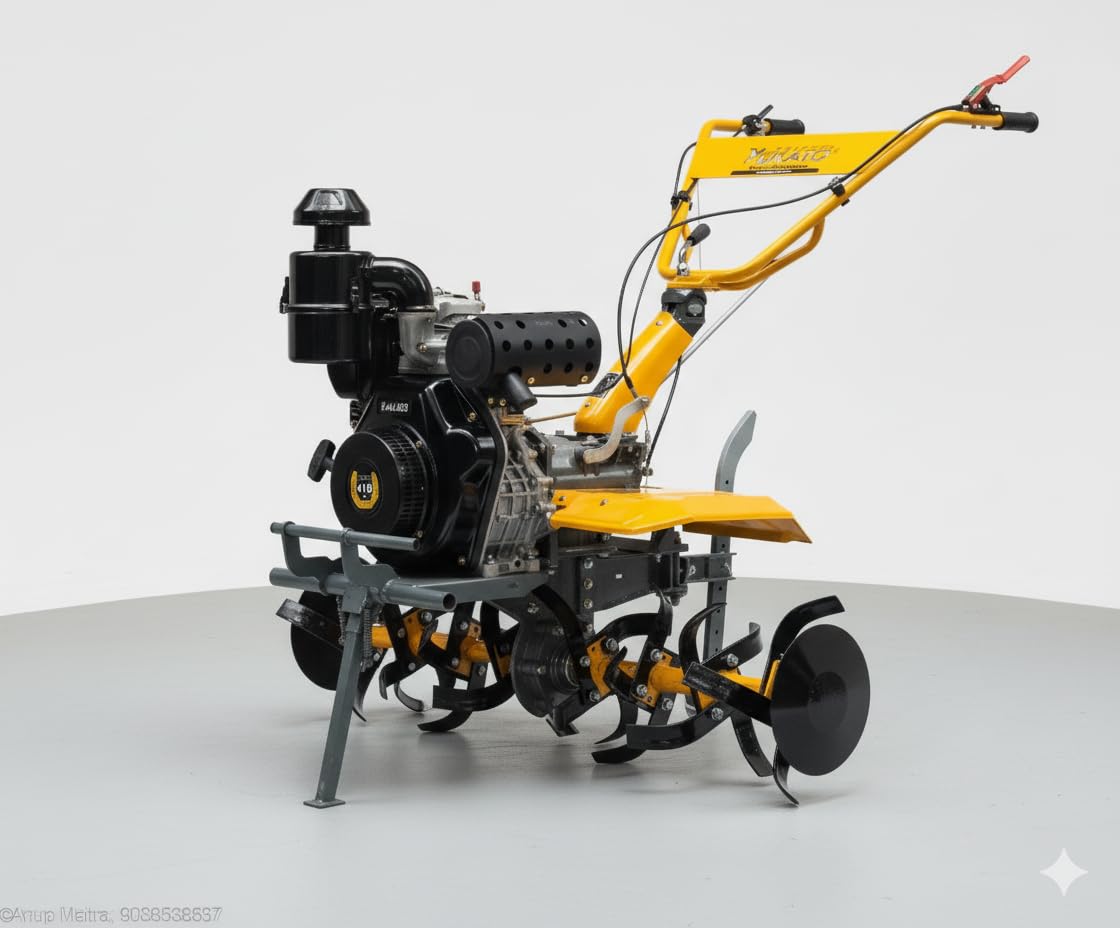
Choosing the right power weeder in Bhutan really matters because our farming conditions are not easy, small land plots, steep slopes, and very different soils from wet paddy fields to hard and rocky land. The machine needs to be strong and good quality, so it can last in tough field conditions without breaking down often. It should also have enough power and torque to work smoothly, especially on slopes and heavy soil, without struggling or stopping. The weight of the machine is also important. If it is too light, it may not grip well on slopes, if it is too heavy, it becomes difficult to handle in narrow terraces. So, balance is key. It should also support different attachments, so farmers can use one machine for weeding, tilling, ridging, and even small transport work. This makes farming much easier and more efficient. Above all, safety component should never be ignored. The machine should have proper guards, stable controls, and an easy stop system. Since farming in Bhutan often happens on uneven and slippery land, safe handling and proper training are very important to avoid accidents. In short, the right power weeder for Bhutan should be strong, well-balanced, versatile and in safe helping farmers work with less effort and more confidence in difficult terrain.
Assessing Your Farm's Needs
Before buying a mini tiller or any farm machinery, it really helps to first understand your farm properly. Every farm is different, and the right machine for one farmer may not be right for another.
Start with the size of your land. If you have small or scattered fields, a big tractor may be hard to use and even unnecessary. A smaller, more flexible machine can actually do the job better. But if you manage larger areas, then a more powerful tractor will save you a lot of time and effort.
Then think about your land condition. In places like Bhutan, where fields are often on slopes, terraces, or uneven ground, stability matters a lot. You need a machinery that can handle rough terrain safely without damaging the soil or putting the operator at risk.
It’s also important to be clear about what work you need the machinery to do. Some farmers mainly need it for ploughing or tilling, while others also use it even for transporting goods, hauling loads, or supporting different farm activities. The more tasks you expect it to handle, the more versatile and powerful your machinery should be.
Lastly, don’t just think about today, think a little ahead. If you plan to expand your farm or try new crops, choosing a slightly more capable and quality machine now can save you from upgrading too soon later.
In simple terms, taking time to understand your farm first helps you choose a machine that truly fits your needs, making farming easier, safer, and more productive.
Horsepower Considerations
When it comes to choosing a power tiller, horsepower isn’t just a number, it’s about making your daily work easier and more efficient. The right machine should feel like a helping hand, not a burden.
For small farms (below 10 acres), a 5–9 HP power tiller is usually more than enough. These machines are light, easy to handle, and perfect for Bhutan’s narrow terraces and uneven terrain. They can comfortably manage tasks like tilling, weeding, and general land preparation without using too much fuel or being difficult to control.
For medium sized farms (10–40 acres), the same range can still work well, especially if the land is not too hard. But if the soil is heavy or you’re doing more demanding work like ploughing or hauling, you may need a bit more power to get the job done smoothly without overworking the machine.
Choosing the right horsepower is really about balance. A machine with too little power will struggle and wear out faster, while one with too much power can be expensive and unnecessary. The goal is to pick something that matches your land and workload, so you save time, reduce effort, and get better results without extra cost.
In simple terms, the right horsepower helps you work smarter, not harder.
Terrain and Traction
Terrain and traction are not just technical details in Bhutan—they directly determine whether a machine can actually work in the field or become a risk.
Bhutan’s farmland is often located on steep slopes, terraced hillsides, and uneven ground. In such conditions, machinery without proper traction can easily slip, lose balance, or even overturn. This not only reduces efficiency but also poses serious safety risks to farmers. Good traction ensures that power from the engine is effectively transferred to the ground, allowing the machine to move steadily even on loose, muddy, or inclined surfaces.
Proper terrain and traction consideration also helps protect the soil. Machines that slip excessively can damage soil structure, disturb terraces, and lead to erosion—something Bhutanese farmers must carefully avoid to maintain long-term land productivity.
In essence, choosing machinery suited to Bhutan’s terrain is about three key things: safety, efficiency, and sustainability. When traction matches the landscape, farmers can work more effectively, reduce physical strain, and safeguard their land for future generations.
Attachment Compatibility
For farmers, choosing a power tiller isn’t just about the machine itself, it’s about what it can do beyond basic tilling. That’s where attachment compatibility becomes really important.
Most farmers in Bhutan work on small plots, often spread across hilly and uneven terrain. Because of this, one machine is usually expected to handle many different tasks—ploughing, puddling, water pump, post harvesting, even running small equipment. If the power tiller cannot support the right attachments, it quickly becomes limited and less useful.
A good power tiller should have a proper PTO (power take-off) system so it can easily run implements like rotavators, water pumps, or threshers. This makes farm work faster and less tiring, especially during busy seasons. In the same way, having enough hydraulic capacity helps in handling attachments like trailers or ridgers smoothly, even on slopes.
Another practical point is safety and reliability. When attachments don’t fit properly or are used with incompatible machines, it can lead to frequent breakdowns or even accidents. For farmers already working in tough conditions, this is something they cannot afford.
In simple terms, the right attachment compatibility turns a power tiller into a multi-purpose partner on the farm. It saves time, reduces hard labor, and helps farmers get more value from a single investment—something that matters greatly in Bhutan’s farming environment.
Fuel Efficiency
Fuel efficiency really matters when choosing a power tiller, especially for farmers who need to keep their costs under control. A machine that uses less fuel helps save money every day, which adds up significantly over time.
Modern power tillers are built to do more work with less fuel. This is very helpful in Bhutan, where fuel can be expensive or not always easy to access in remote areas. With better fuel efficiency, farmers can work longer hours in the field without stopping often to refuel, making their work more productive and less stressful.
Diesel engines are still the most common choice among Bhutanese farmers which is not necessarily true. In simple terms, a fuel-efficient power tiller helps farmers reduce expenses, work more efficiently, and manage their farms more smoothly in the long run.
Spare parts, Maintenance and Support
Spare parts, maintenance, and after-sales support are what truly keep farm machinery reliable, but what makes them even more valuable is who delivers them and how quickly they are available.
For farmers, especially in Bhutan, machines don’t fail at convenient times. Breakdowns often happen in the middle of land preparation or planting. That’s where experienced technicians become critical. Skilled technicians can quickly diagnose problems, fix them correctly the first time, and even guide farmers on proper machine use and preventive care. This not only reduces downtime but also helps avoid repeated issues and costly repairs.
Just as important is the availability of nearby service outlets. When support is far away, even a small repair can take days and weeks due to travel and logistics. But when service centers are closer, response time is faster, transport costs are lower, and machines are back in the field much sooner.
In this regard, Depel Agro Tech Private Limited plays a crucial role by maintaining a presence in key locations such as Thimphu, Trashigang, Trashiyangtse, Mongar, Samdrupjongkhar, Samtse and Zhemgang, helping improve accessibility for farmers across regions. Their involvement in supplying agricultural machinery and spare parts further strengthens this support system.
With experienced technicians and accessible service outlets, farmers benefit in several ways:
Faster repairs and reduced downtime
Proper maintenance and longer machine life
Reliable technical guidance and training
Confidence to use machinery during critical farming periods
Combined with dependable spare parts and maintenance services, this kind of strong local support system turns farm machinery into a trusted and long-term partner, not just a one-time purchase.
Quality, Budgeting and Financing
When you buy machinery from Depel Agro Tech Private Limited, you are not just purchasing a machine, you are getting a complete support system built around your farming needs.
First and foremost, you receive reliable, good-quality machines designed with safety in mind, so you can work with confidence in the field. These machines are also provided with all the necessary accessories included, meaning you don’t have to run around looking for extra parts after purchase.
Another advantage is the reasonable and farmer-friendly pricing, which makes modern farm equipment more accessible even for small farmers.
What really makes a difference is the strong after-sales support. Depel Agro Tech ensures that experienced technicians are available to help you when needed, and service support is accessible through nearby outlets, so breakdowns don’t leave your farm idle for long.
Moreover, the company also helps farmers with loan facilitation from financial institutions, making the buying process easier. In many cases, this support can even help you access financing with no collateral, which is a huge relief for farmers who want to upgrade but face financial barriers.
In simple terms, Depel Agro Tech is not just selling machines, it is standing with farmers from purchase to performance to financial support, helping make farming easier, more productive, and less stressful.
Share this article:
Need Agricultural Solutions?
Contact us on WhatsApp to learn more about our products and services tailored for Bhutanese agriculture.